Exercise 10 : Calf Stretches

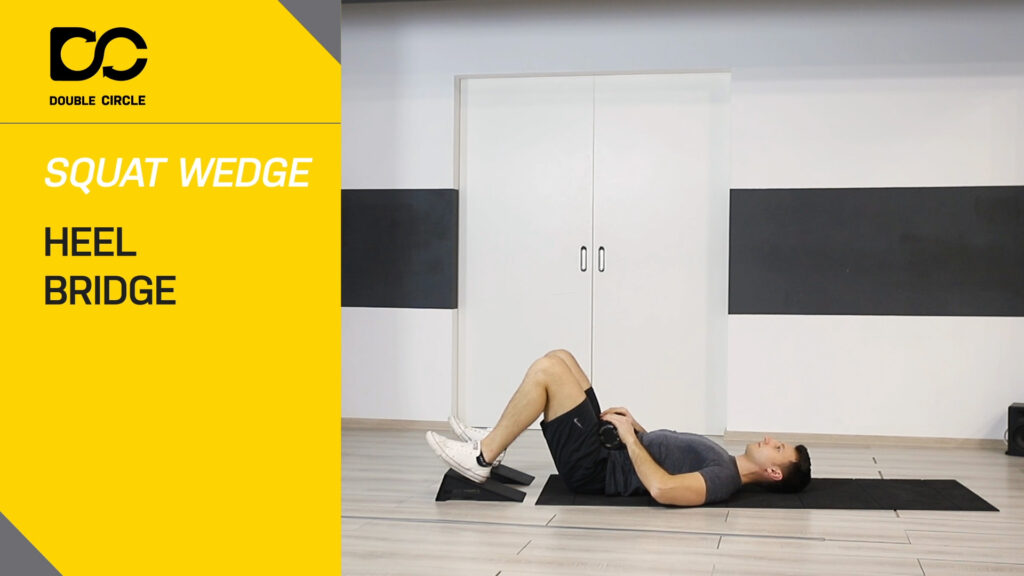
Heel Bridge

A heel bridge is much like a regular glute bridge that uses your body weight to build muscle.
But instead of pointing your arms toward your feet, you hold a barbell positioned across your hips while completing the exercise.
Beginners should start lifting with only small weight, then add more weight over time as their muscles strengthen.

How To

    • Lay flat on your back.
    • Roll a dumbbell over your legs and let it rest where your hips bend. Consider using a pad that wraps around the dumbbell to cushion the weight against your body.
    • Bend your knees 90 degrees, so they point up to the ceiling.
    • Keep your feet flat on the wedges.
    • Place your hands around the dumbbell.
    • Use your heels to push your hips upward while you hold the dumbbell. Your shoulders and head will remain flat on the floor. Your knees should still point upward, with your body forming a straight line from your shoulders to your hips. You may feel your abdominal muscles tightening while moving into this position.
    • Hold this upward position for a few seconds, then slowly release back to the floor.
    • Move your body slowly in and out of this position for up to 10 reps, depending on your strength, stamina, and the barbell weight.

Benefits

Targeting the gluts and back of your leg.
Exercise 9 : Calf Raises

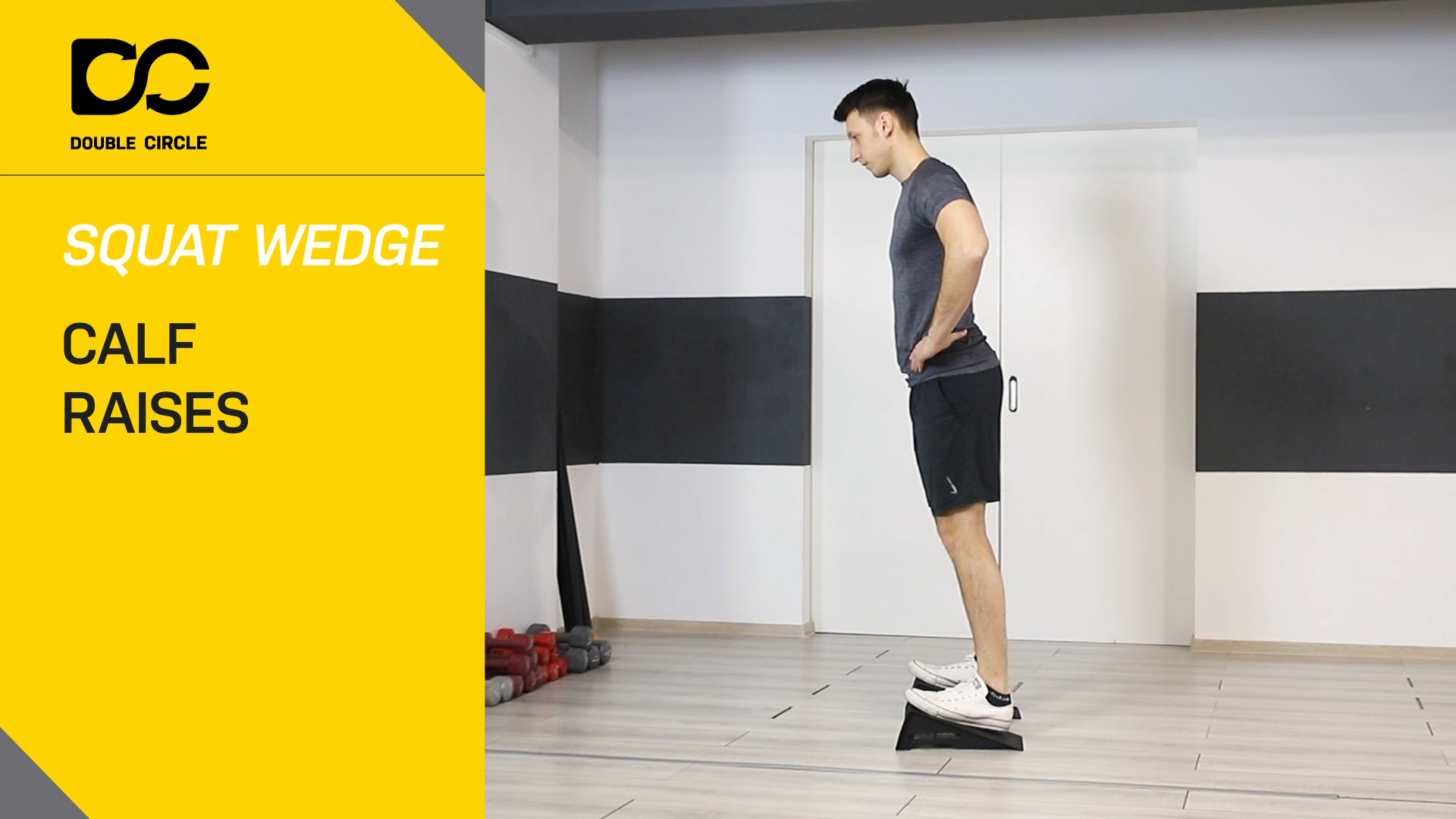
Calf Raises

Calf raises are an easy and effective exercise that you can use to target the muscles on the back of the lower legs.
This exercise increases the strength of your calves, allowing you to jump higher, and improves the tone, definition, and appearance of your lower legs.

How To

  • Stand with your torso upright, your feet hip-width apart, and your toes pointing forward.
  • Raise your heels off the wedges and squeeze your calves.
  • Return to the starting position, by slowly lowering your heels, and repeat.

Proper Form

When doing calf raises, brace your core, face forward and keep your toes pointing straight ahead.
Raise your heels and breathe out as you squeeze your calves.
Breathe in as you lower your heels and slowly return to the starting position.

Benefits:

Strengthen calves.
Increases ankle mobility.
Streaches the achilles tendon.

Exercise 8 : Heel Bridge

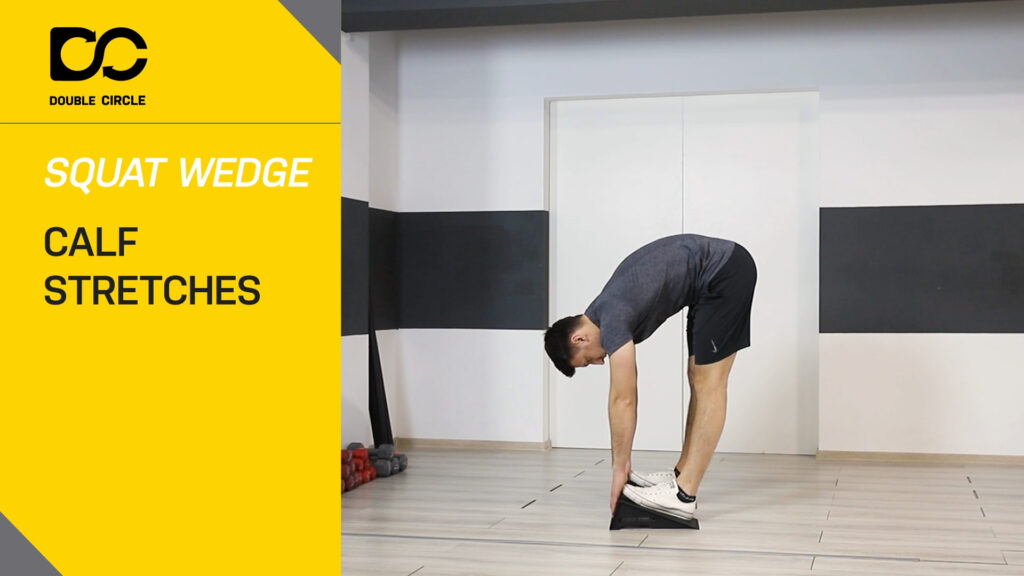
Calf Stretches

The most common stretch performed on a slant board is the calf stretch.

How To

Stand with both feet firmly on the wedges with straight legs.
Slowly tip forward to touch your toes.
You will feel the stretch on your calves and down through your hamstring muscles.
Hold the pose for somewhere between 30secs to a minute (the tighter the muscles, the longer the hold needed to loosen them).

Benefits

Increase flexibility and range of motion in the hips.
Prevents muscle tears.
Increases athleticism.

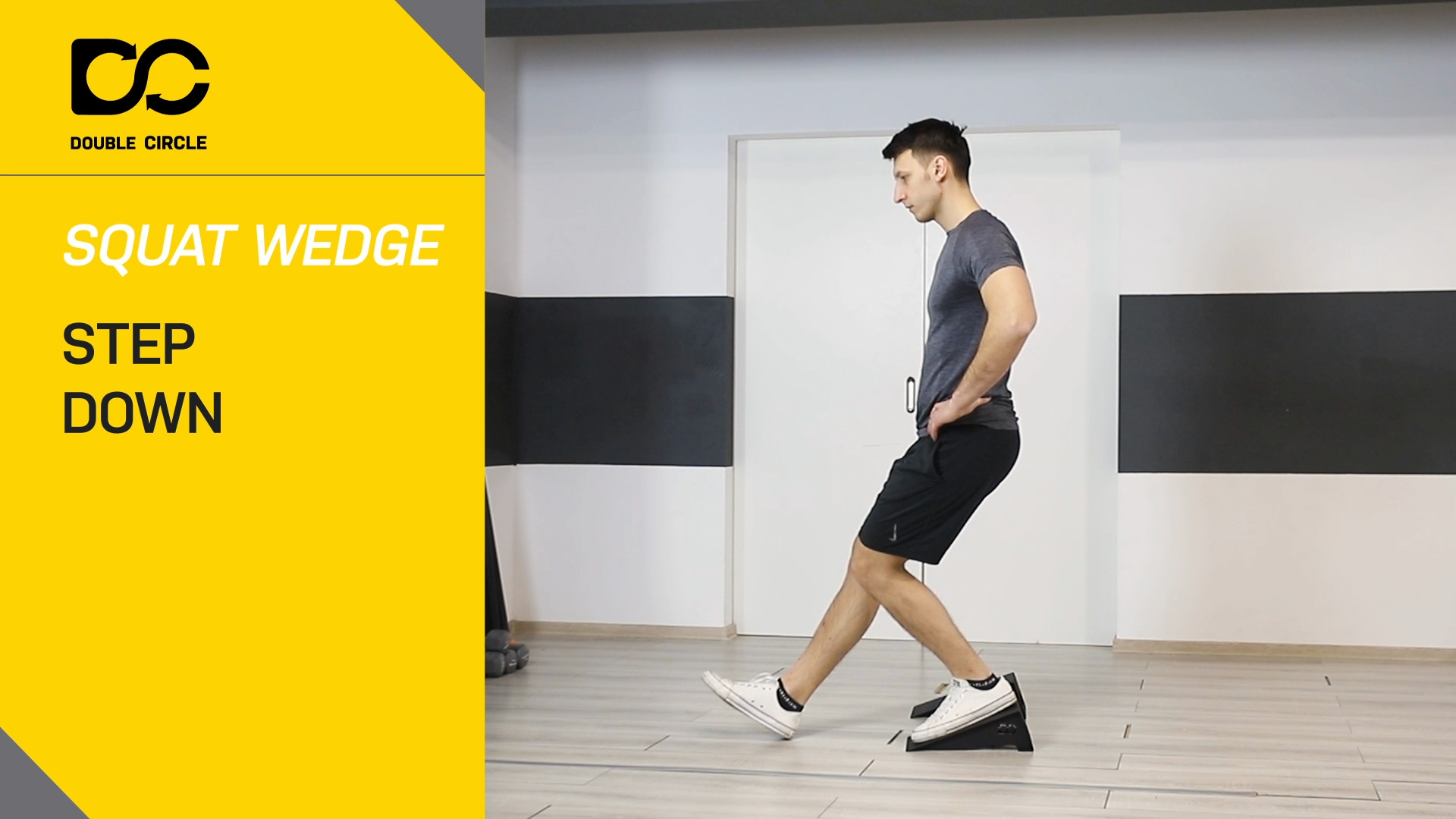
Exercise 7 : Step Down

Step Down

This exercise builds strength and resiliency about the patellar tendon as well as trains the quads eccentrically and opens up the front of the hip for stiff hips.

How To

    • Extend one leg and lower until the heel touches the floor
    • Keep the knee of the bent leg aligned with the foot
    • Flex your knees and lower your hips, Start slowly at first
    • Push back up

Benefits

Target the VMO muscles for kneecap stability.
Can reduce effects of patellar tendinopathy.
Develops explosive power.

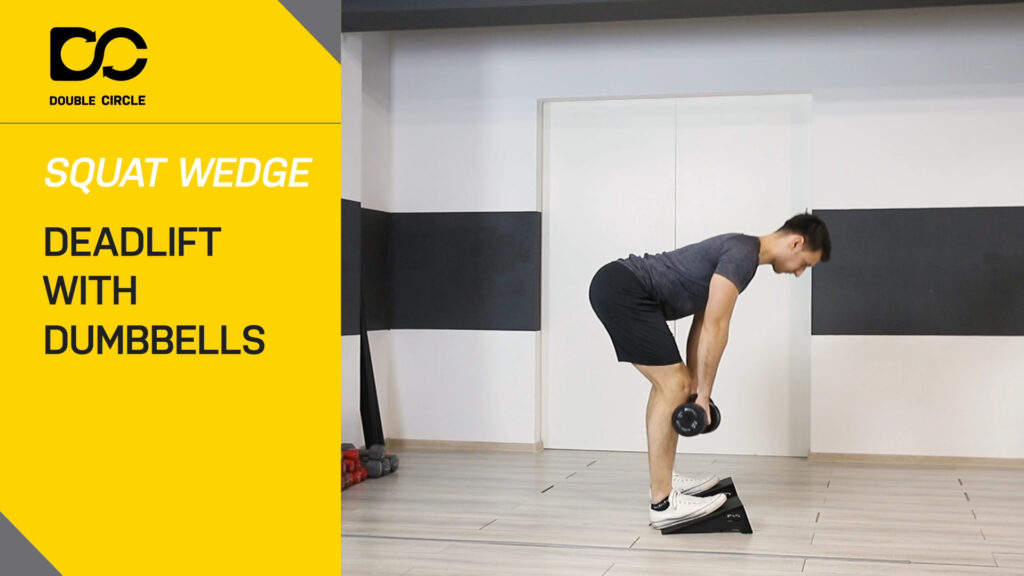
Exercise 6 : DeadLift with Dumbbells

DeadLift with Dumbbells

The dumbbell deadlift is a classic strength-building exercise found in nearly every effective, well-programmed fitness routine.
And for good reason: The move hits multiple muscle groups, improves your day-to-day life, and makes you feel oh-so-powerful.

How To

  • Stand with feet hip-width apart and hold a dumbbell in each hand in front of thighs, palms facing body.
  • Engage core and pull shoulder blades down and back. Then, keeping arms straight, send hips back and bend knees slightly to lower both dumbbells down to the floor in front of legs. Continue lowering until hips are fully pushed back and the weights are as close to the floor as far as possible.
  • Keeping the chest up, push through feet to return to standing, squeezing glutes at the top.

Benefits

Builds strength in the lower body as well as the back, shoulders, and core.

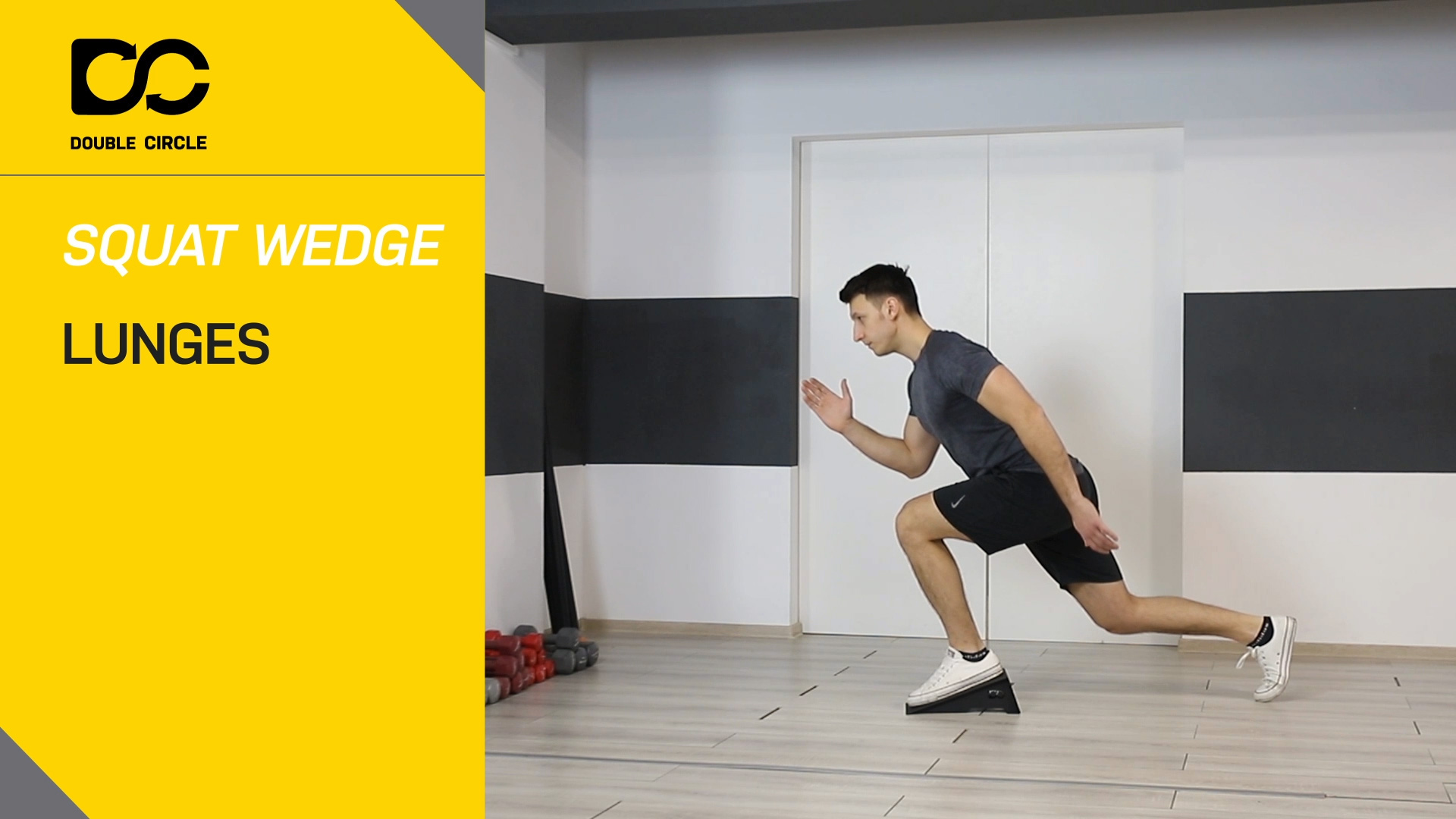
Exercise 5 : lunges

lunges

Lunges are one of the most effective lower body exercises you can do.
They help tone, strengthen and shape your legs and glutes, and improve the flexibility of the hips.
The lunge works several muscle groups simultaneously, speeds up the metabolism, and helps with weight loss.

How To

    • Stand with your feet hip-width apart, keep your back straight, your shoulders back, and your abs tight.
    • Take a step forward and slowly bend both knees, until your back knee is just above the floor.
    • Stand back up and repeat the movement.
    • Alternate legs until the set is complete.

Proper Form

When doing lunges, keep your weight in the front heel and make sure that when you’re bending your front knee, your thigh and leg form a 90-degree angle.
Maintain your feet hip-width apart throughout the entire exercise, don’t put one foot in front of the other.
Breathe in as you lunge, and maintain a smooth and steady rhythm.

Benefits:

Develops keep knee bending capabilities.
Stretches hip flexor and Achilles tendon.
Develop ankle and knee mobility, enabling a deeper squat.

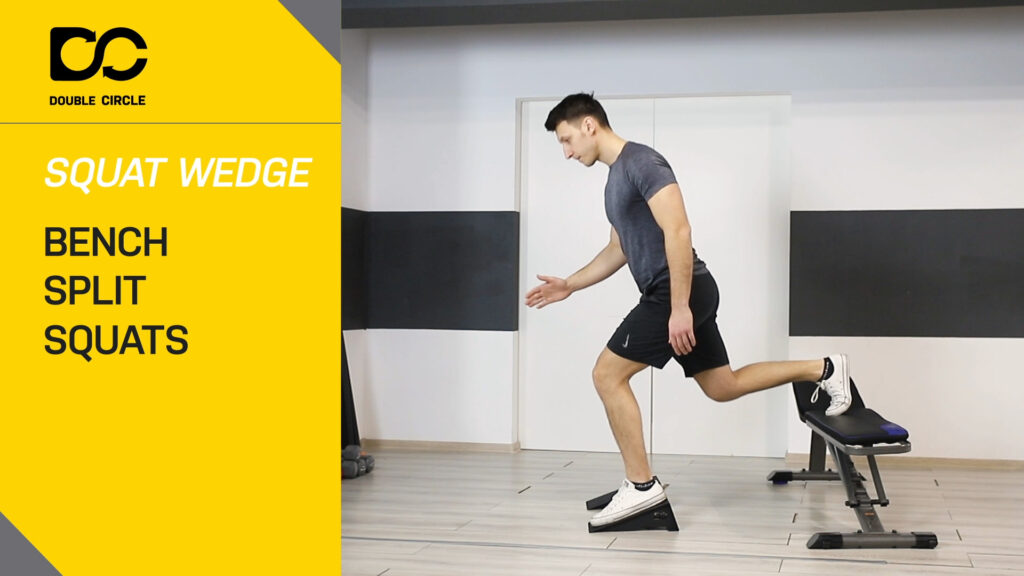
Exercise 4 : Bench Split Squats

Split Squat

The bench split squat is a great exercise to improve your balance and knee stability, and also to target your posterior chain muscles, hamstrings and glutes.
If you want to lift your butt, this is definitely one of the best exercises you can do. 

Pair it with sumo squats and Romanian deadlifts and you’ll have a round and firm booty in no time!

How To

    • Place a step or a box behind you and stand up tall.
    • Position your right foot on top of the step, bend your knees and lower the hips until your left thigh is parallel to the floor.
    • Return to the starting position and repeat.
    • Switch legs.

Proper Form

When doing the bench split squat, keep your back straight, your chest open, and face front.
Maintain your balance by engaging your core and keep your weight in the front heel.
Breathe in as you lunge and don’t let your knee go past your toes.

Benefits:

Improve your balance and knee stability, and target your posterior chain muscles, hamstrings, and glutes.

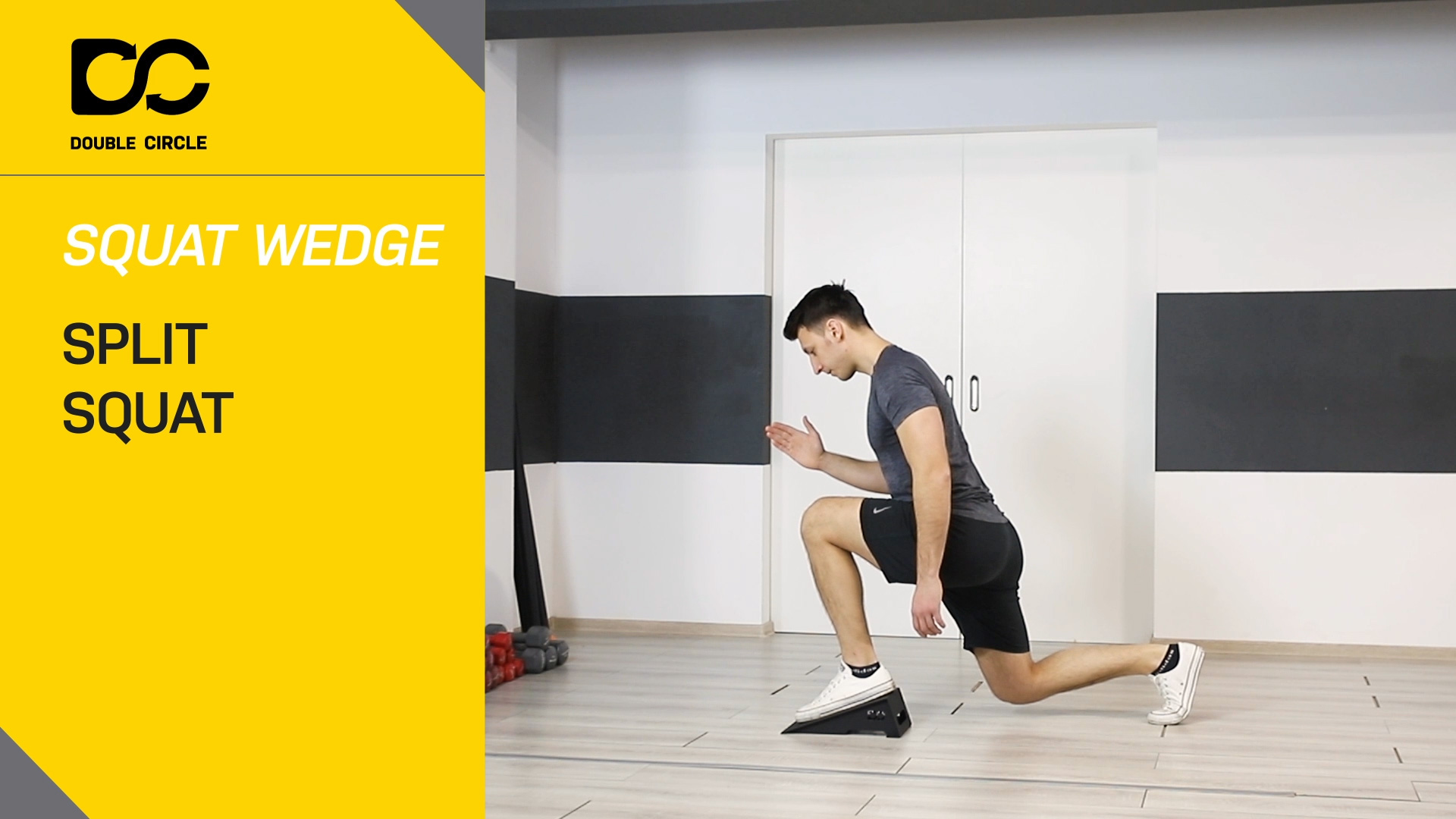
Exercise 3 : Split Squat

Split Squat

The split squat movement is very similar to the lunge, but it places more emphasis on the hips, glutes, and hamstrings and less emphasis on the quads.
The split squat also has a reduced lumbar spine loading, when compared to the lunge, and it helps to improve lower body strength and balance.

How To

    • Start in a split leg position, with one leg forward and one leg back.
    • Flex your knees and lower your hips, until the back knee is just above the floor.
    • Stand back up and return to the starting position.
    • Repeat this movement for as many reps as recommended and then switch legs.

Proper Form

When doing split squats, keep your feet hip-width apart, roll your shoulders back and tighten your abs. Breathe in as you lunge, and put your weight in the front heel. 
Keep the movement smooth and continuous and exhale as you push yourself back up.

Benefits:

Improves hip mobility, quad engagement, and leg drive.

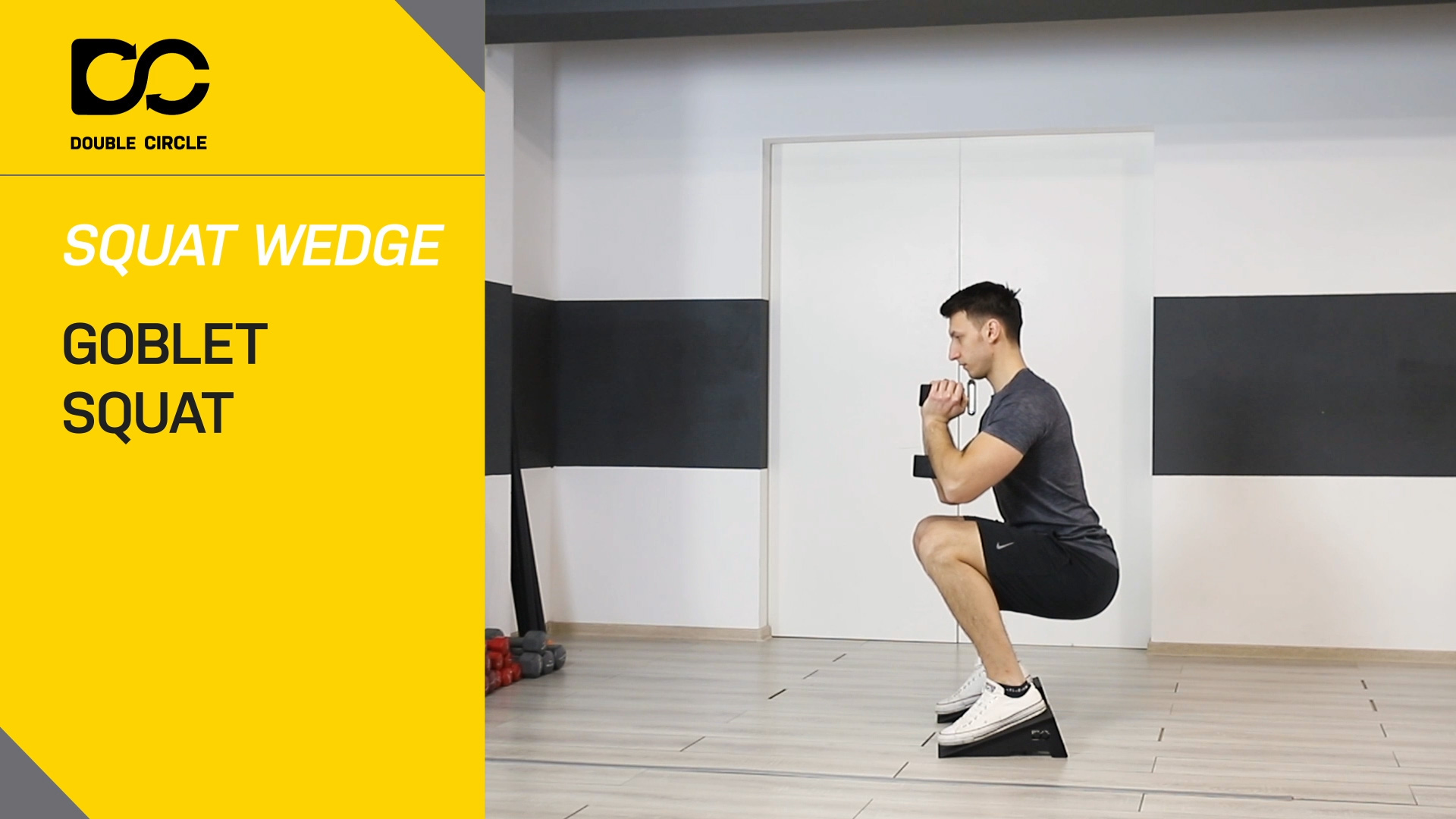
Exercise 2 : Goblet Squat

Goblet Squat

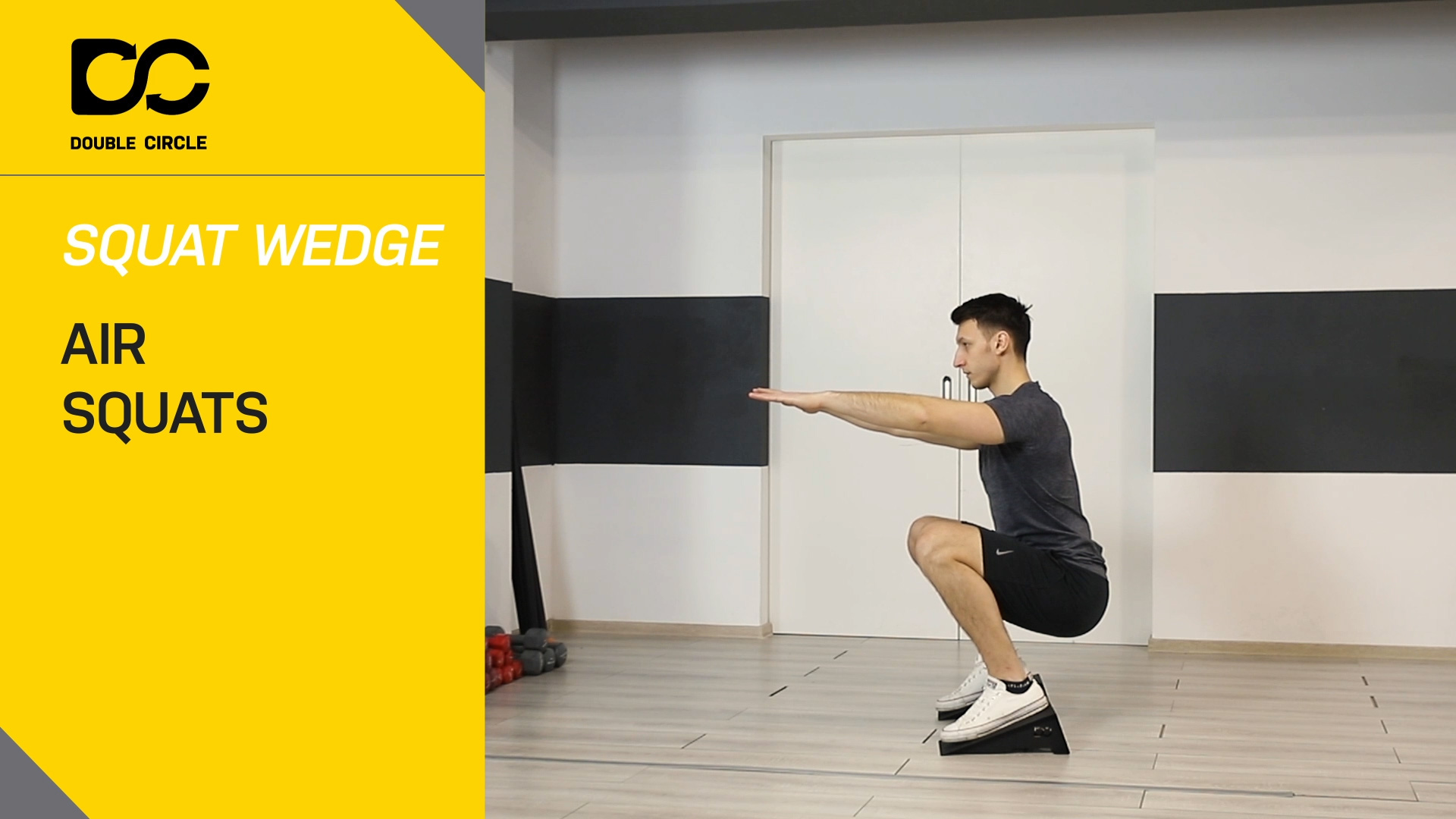
This exercise is an anterior-loaded squat variation performed with either a kettlebell or dumbbell.
Holding the weight anteriorly encourages you to stand up straighter, get the upper back tight and puff out. 

The weight is a counterbalance that encourages you to sit between your legs and not over your knees.

How To

  • Set your feet in your preferred position and grip a dumbbell or kettlebell under your chin with your elbows by your side.
  • Engage your anterior core and get your chest up and shoulders down.
  • Then grip the floor with your feet and squat down between your knees, keeping your chest up.
  • Once you have reached your preferred depth, push your feet through the floor, squat, and finish by squeezing your glutes at lockout.
  • Reset and repeat for desired reactions.

Benefits:

Targeting Quad, Hamstrings, Glutes, Core, Upper Back, Forearms & Biceps